
Writing Voiceover for Trailers: Lakeburg Legacies Launch Trailer Deep Dive
I find writing voiceover for trailers to be extremely fun and I jump at the chance to do it. Writing in a character voice is sort of like improv; you want to be creative and clever, but you need to keep your character in mind throughout so their "voice" shines through. Combine that with the ever-present need in trailers to communicate a lot of specific information in a clear and efficient waya, and you've got yourself a nice little challenge!Today I'll do a deep dive on the Launch Trailer for Lakeburg Legacies, for which I created the trailer and wrote the voiceover script. Let's get into it!GOALS
Where are we trying to go? What are we trying to say?
I’d already worked with the lovely team at Ishtar Games on a couple trailers before, when they asked me to work on this project. They came to me with a prompt and a rough outline to kick things off, and away we went!The first step is always to identify what information you’re trying to communicate. No matter how broad or specific, the goals of a trailer will give you thematic direction. What do you want people to know by the end of the trailer?For this Lakeburg Legacies trailer in particular, the outline had already been worked out in broad strokes by the developer team. This was important because they had a really fun gimmick in mind: they would commission artwork that referenced popular memes, drawn in the style of the game. They originated this idea in the game’s excellent announcement trailer. Another important factor was that they planned to keep showing one POV character throughout the memes, to create a narrative thread that tied the trailer together. That extra work and expense with the artist meant I had to work that commissioned art into the VO script. So before I even started writing, I knew we’d use a common thread of one point-of-view character to tell a story of their life within the game. More on the importance of POV characters, below.So this gave me a narrative path that the VO script had to guide the viewer through: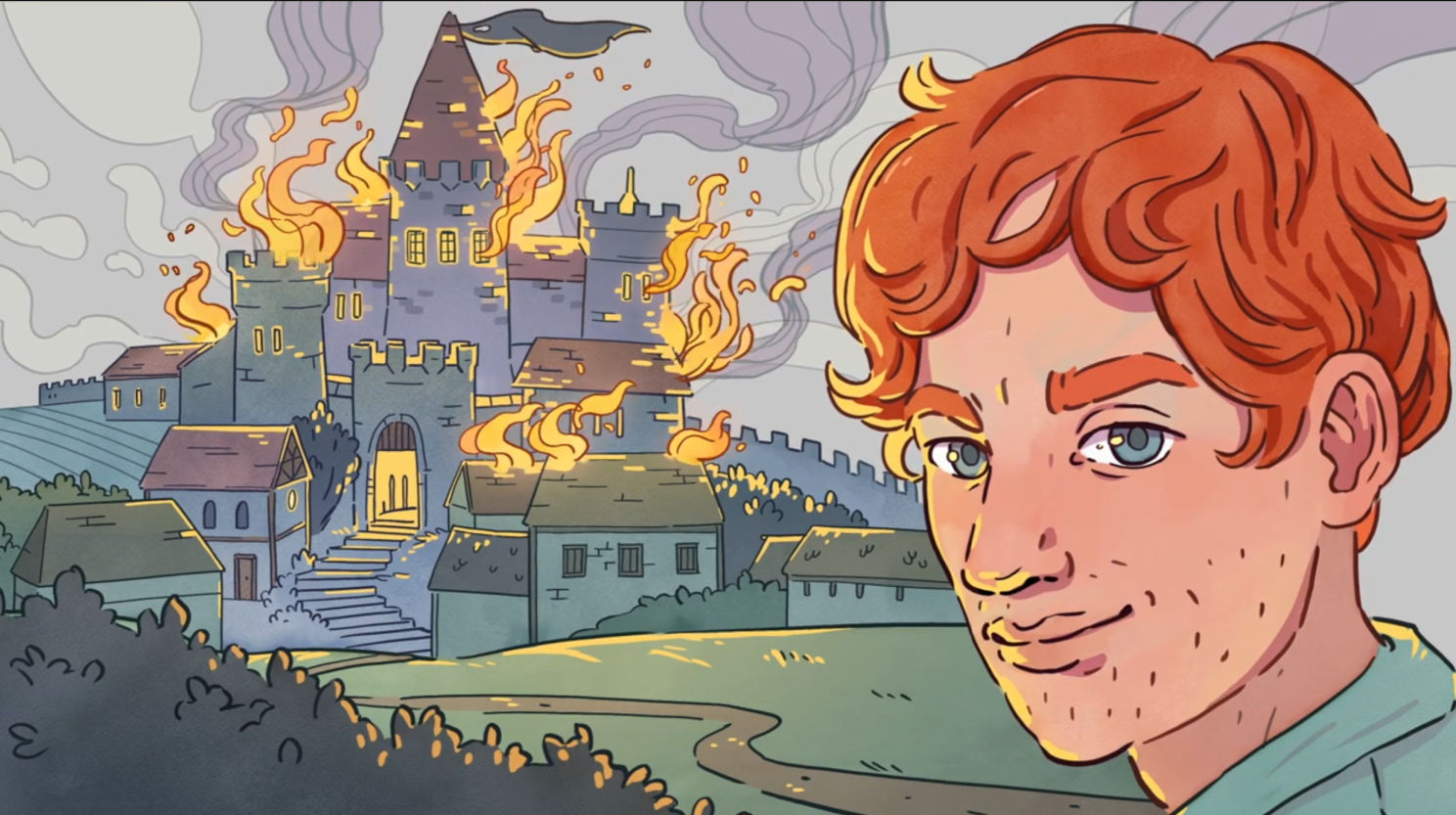
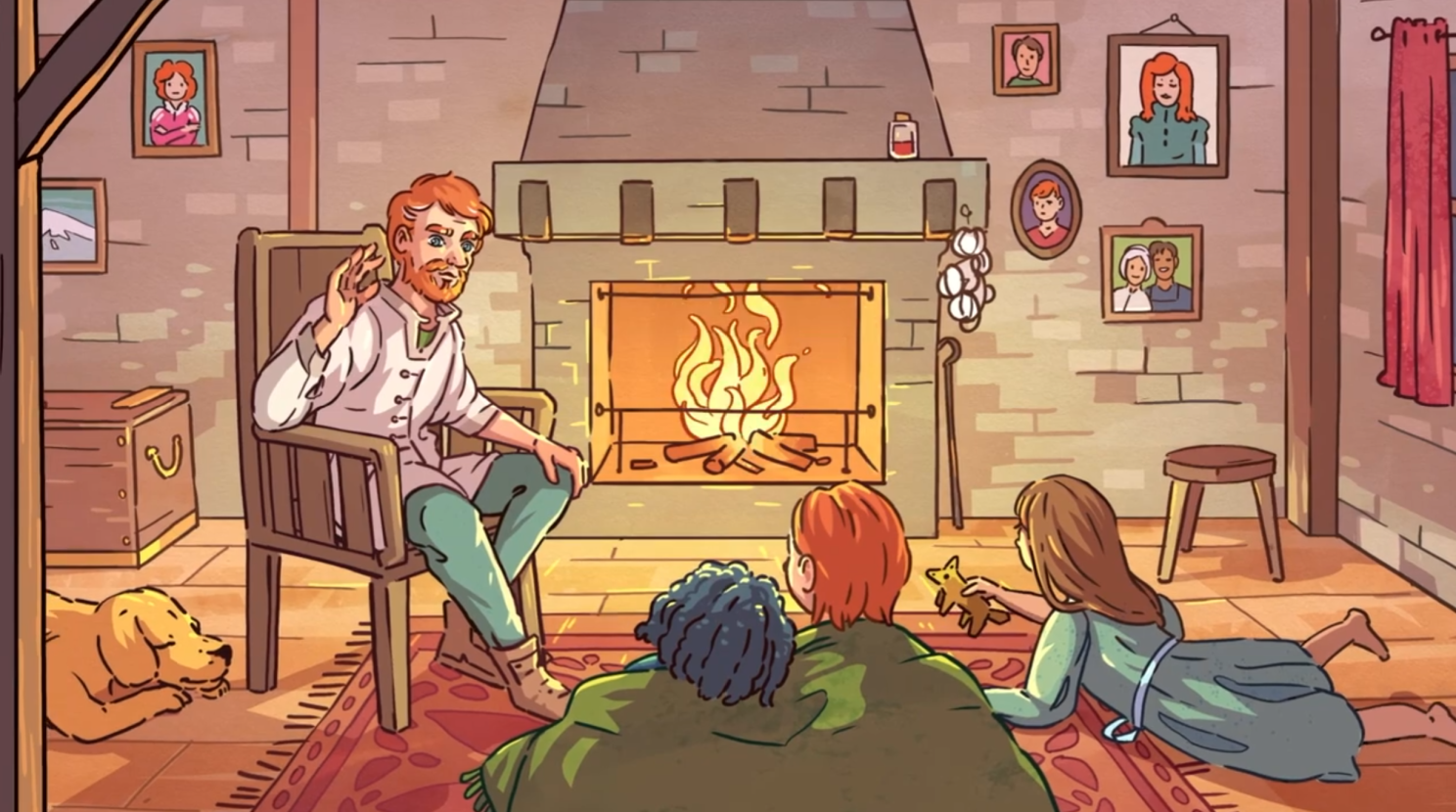
Introduction: The frame story is a middle-aged man telling a story to his children (a la How I Met Your Mother)Management gameplay & resource productionDating gameplayDrama! Like the random narrative events that can occur in the game (adultery, etc)Chaos! (Thieves’ Guild, coup d’etat, etc)Conclusion: Return to the frame story
If the developer team hadn’t provided this outline up front, I would have written the outline myself as part of the scripting process. When writing creatively with the limited time we have in trailers, you need to know where you’re going in order to get there as efficiently as possible. Put another way, you need to know what information you’re trying to communicate, in order to find the most clear and concise way to say it.POV & CHARACTER
Who is saying this?
The point-of-view character will shape the word choice, sentence structure, and bits of flavor text as you write a voiceover script.For Lakeburg Legacies, I pitched two options during the scripting phase. The obvious primary option focused solely on the aforementioned father figure telling a story. Before I started writing, I knew his age, his accent, and his tone of voice.But when I started getting into the headspace of a father telling his children a bedtime story, I got stuck a couple of times figuring out how we would weave the drama and chaos into the story. Surely a father would smooth over those naughtier parts of his story, and edit them out? For example, when I tried to write in a coup d’etat to utilise the firestarter meme (~ 01:23 in the trailer), it felt strange that this father character was bragging to his children about something that should definitely not be publicly known. “By the way I also started that coup d’etat kids, but don’t worry about that”. Why would he tell his children that? What made more sense to me was the idea that the children listening to the story kept piping up, as kids do. And kids love to bring up the gossipy, dramatic things they’ve gleaned. So I pitched a second option for the VO script that added a child peppering in their own questions. This addition allowed for more humor since the father could get playful or annoyed at the child’s interjections. And of course, this is the option we went with.It’s worth noting that I pitched this second option with full disclosure it would come with an additional cost, for the other actor. Budget is always an important factor.As a side note, we got really lucky with casting. The actor we chose for the father figure saw the sample script and recommended his young daughter for that role. So t’was a real father-daughter team!EDITING

Make it say more, with less
So you’ve written a voiceover script. Then you read it out loud, and you realize it’s way too long. Now what??I’d like to introduce you to my favorite editing tool of all time… the TABLE.I find it very helpful to break down every line of a script, and think about what information it’s communicating (back to those Goals again). It can be helpful to consider the planned visuals at the same time, since narrative dissonance (aka, unreliable narrators) is a very useful communication tool.I’ll also sometimes add a column for the Emotion to further think about what the script line is achieving. 
One thing we’re looking for here is making sure we’re addressing all the Goals of the trailer, and not missing anything important. But we’re also looking at whether we’re doubling up on messages. If three separate sentences in a voiceover script are basically saying the same thing, we can cut two of those out and save some runtime.Further, if every line feels like it’s communicating the same emotion (say, humor), it’s worth thinking about whether that’s the best choice. For humor-driven games, that might be the way to go! But it can force you to think about whether your script includes enough key information, while still having that fun flavor.This works both ways, of course. If a voiceover script only includes information and no significant emotion (not just humor, but maybe excitement or sadness or fear), you can think about whether that straightforward approach is the best way to communicate the information set up by your Goals.It’s also important to be aware of your own habits as a writer. For example, I tend to be hyperbolic and long-winded! If you look back at those two script lines I’ve highlighted in the table above … the word “very” appears in both lines! AUUUGGHHH.
I missed this at the time and it’s too late now. But this is a great example of why it’s helpful to have clarity on your own writing style, and be willing to kill your darlings. Cutting 1-2 words out of a sentence can be the difference between a voiceover line feeling clunky, or being well-timed with whatever the music is doing.PHRASING
How do you say it?
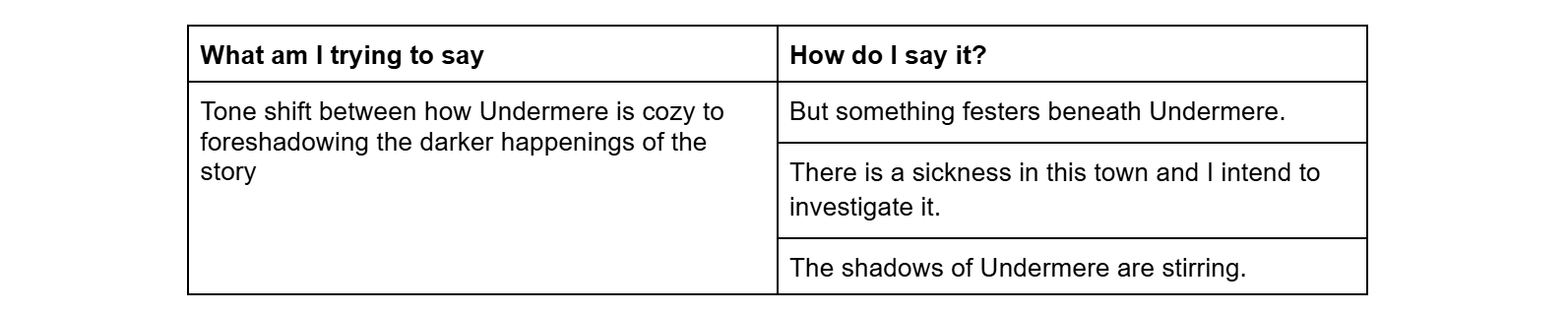
Writing scripts can be challenging because you need to communicate as much as possible, with as few words as possible. And you also want it to sound good. Interesting, emotional, even funny! Wordsmithing is no small task.The most common advice you’ll find for writing is: rewrite, rewrite, rewrite. The first way you write out a sentence is rarely the best way that sentence can be wrought. Uh-oh, here comes another table!!!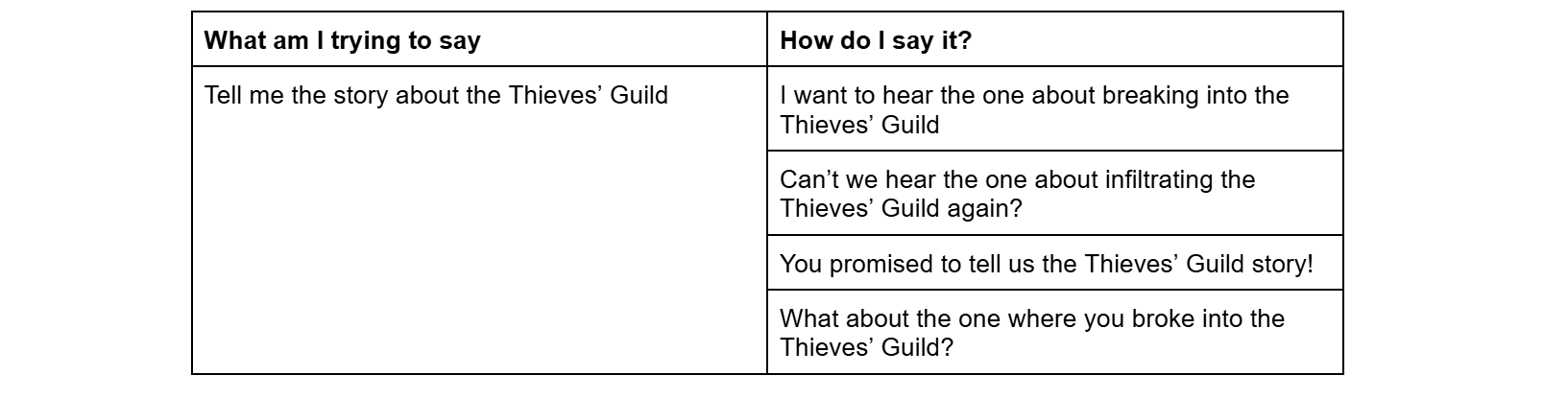
It can be helpful to try writing the same line several different ways. Consider how each tweak gives a slightly different meaning, tone, feeling, and imagine how it might sound with the voice actor’s delivery.The example above is quite straightforward, with little change in meaning across all the options. Here’s a more complicated one, from the launch trailer for Strange Antiquities:You can really let your imagination run wild when playing around with word choice and phrasing! If you come up with a fun word, like festers or creeping or peculiar, write it down and keep it in mind.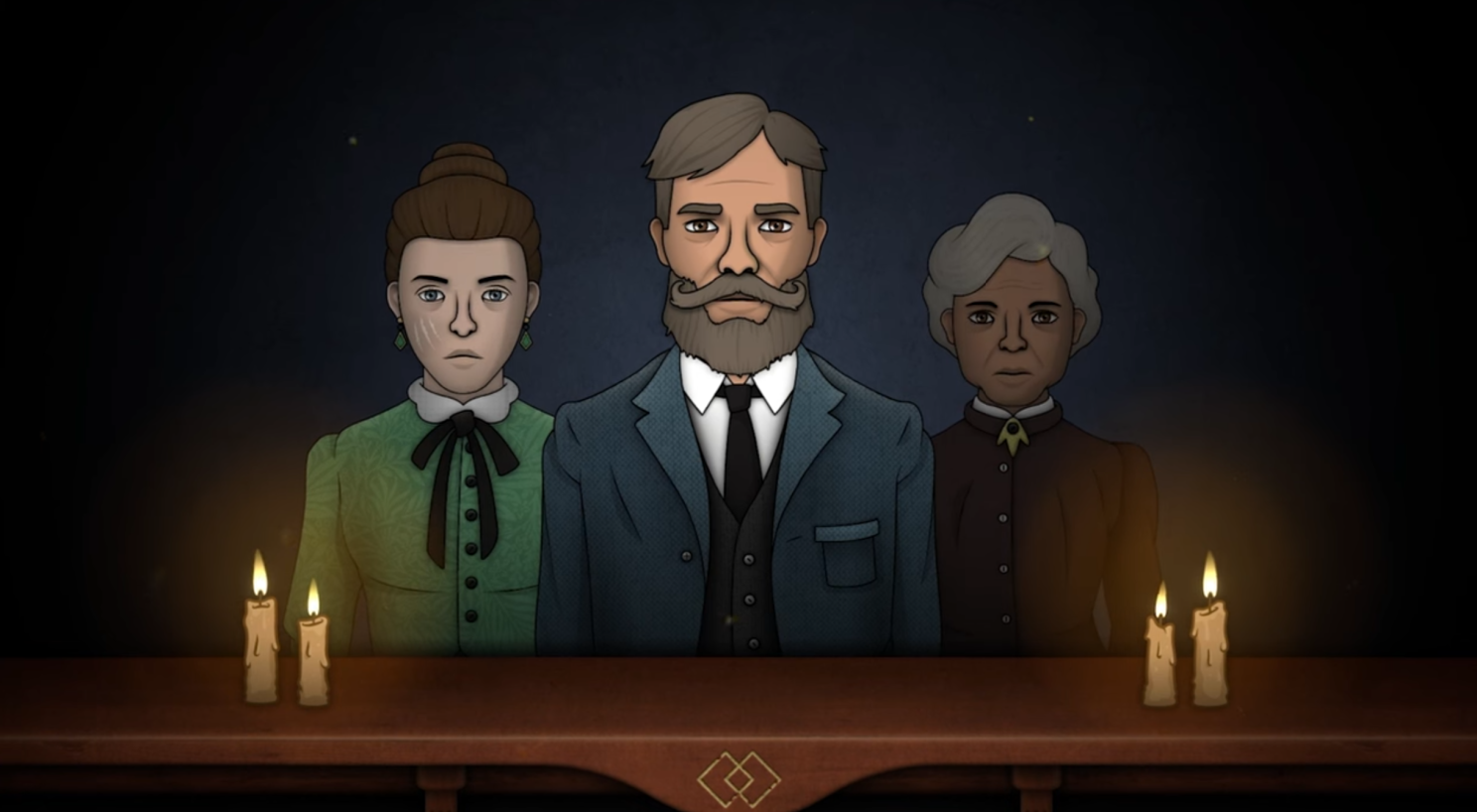
FEEDBACK
How to give it, how to take it
It can be intimidating for developer and publisher team to provide feedback. When sharing a drafted voiceover script, I like to prompt feedback with questions, like:1. What DOES work, in this script? Do you like the word choices used; Do you feel like we’re communicating everything we need to get across?2. What DOESN’T work, in this script? Does the character “sound” right? Have we missed including an important gameplay element?For Lakeburg Legacies, the first version of the voiceover script that included both POV characters got an important note: the child had too many lines, and it felt almost argumentative with how often they were interrupting “Papa”.This ended up being an easy enough fix, because I was able to take the information of two of child’s lines and reframe them as something “Papa” was saying, without any interruptions from the kid. As a bonus, this ended up making the overall script shorter and tighter too.IN CONCLUSION
Writing is hard. Now what?
I always find it difficult to get into the nitty gritty of my creative process, but I think it’s a good exercise even so! If you have any questions about how I approach script writing for trailers (for voiceovers or more generally speaking), or if you’re interested in something else about the trailer-making process, let me know!